Cynicism versus flower planters
During the past two years, white nationalists have started pogroms in England, and far right politicians have been taking advantage with the help of Big Tech. Much has been said about this, and the role the “manosphere” and its Big Tech algorithmic boost in aiding and abetting these trends.
Something I've recently detected is a quieter and equally damaging complement to this activist, in-your-face white nationalism, and it's a deeply seeded, mostly-male cynicism. And it is like fertiliser for the far right.
I honestly can't say I get out much with my energy impairment. I use most of my energy to work, and then I rest. But these days, when I talk to people, it's medical staff (mostly women but only for like five seconds), other dog walkers (mostly not cynical people, must be something about dogs), people on my street, and taxi drivers (mostly men).
But I've started to notice among some men, perhaps a loud minority, this attitude that “nothing can be done” and anybody that thinks we can get out of this hole, let alone who wants to start climbing up, is worthy of a talking to at best, or mockery at worst.
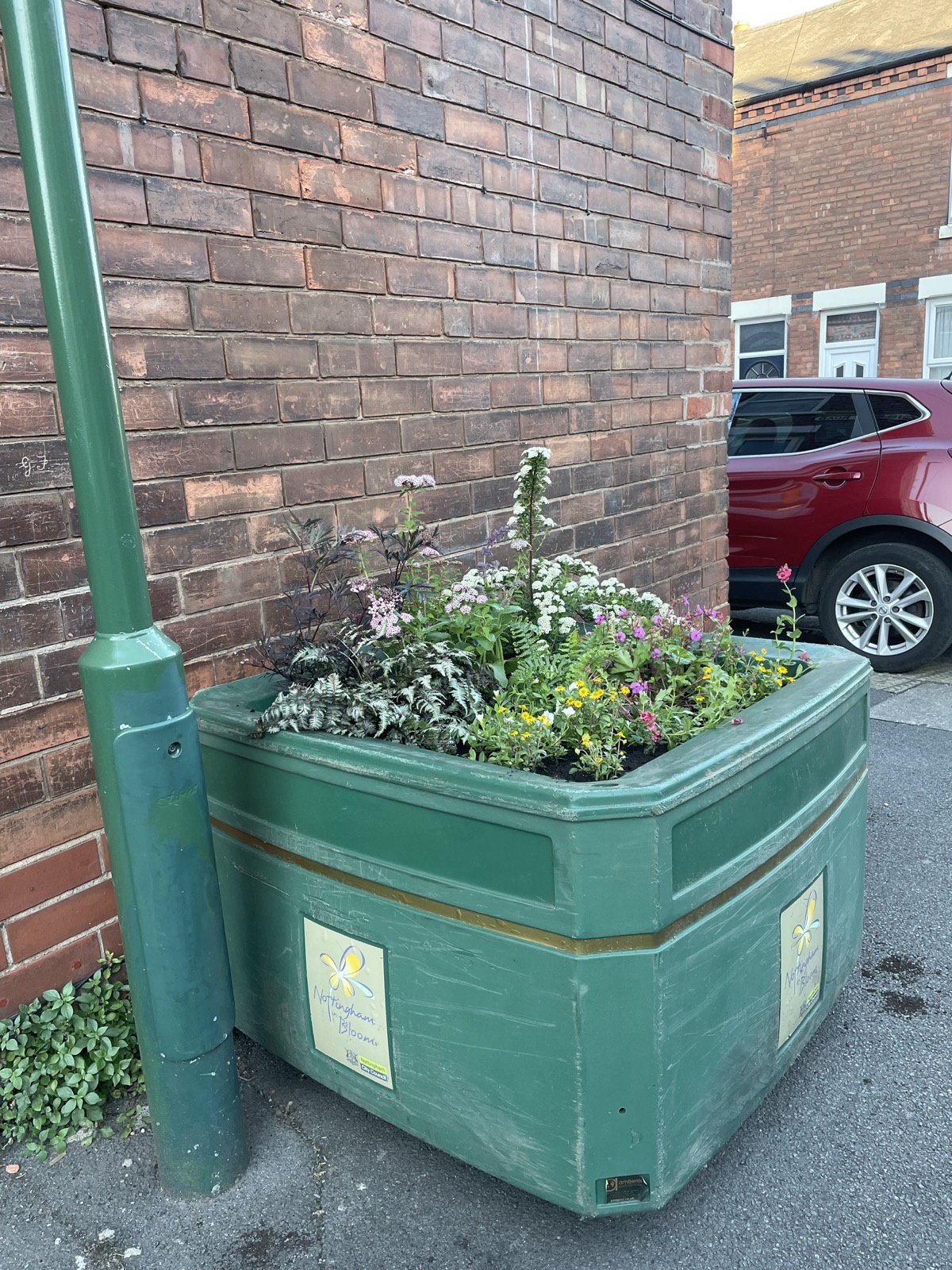
A good example recently was at the delivery of some planters and perennial flowers that we finally got from the council for our treeless street, in a place with 4% tree canopy cover. People on our street having been pushing for this for at least six years. (Ironically, our neighbourhood is called Forest Fields.)
At the urging of our local councillor, who was crucial to securing these small patches of hope, a number of men joined the launch event, an old school trade unionist, some younger (queer?) men. And of course there were a number of women, including a woman who attended with her mum who had lived on the street for 25 years.
Kids joined in and helped plant the flowers and shrubs.
Snacks were munched on.
A local journalist who covers the “flytip” beat interviewed residents – illegal dumping was one of the motivations behind putting flowers in these spots.
There was a lot discussion about fears that the planters would be littered on, that the flowers would be stolen (recently over 100 plants were stolen from the urban Arboretum not far away!). But everybody agreed it was worth a shot, except two people.
What struck me was the separate intervention of two men (of different ethnic backgrounds and age groups, neither past middle age) who swooped in to make disparaging comments about the initiative. They could have simply ignored what we were up to, or walked by. But they felt moved to approach the group and make their voice heard, stating that our neighbourhood is a dump site, and nobody will allow anything nice to take root here.
When I lived in Portugal, I learned of the archetype of the “Velho de Restelo” (The Old Man of Restelo), a busy-body pessimist. Portugal's Shakespeare, Camões, created the character in his epic poem The Lusiads, an old man who shouted from the foreshore of the Tejo River to tell Portugal's early nautical explorers in their big wooden boats that navigating into the Atlantic mists would end in tears.
What new disaster dost thou here design? What horror for our realm and race invent? What unheard dangers or what deaths condign, veiled by some name that soundeth excellent?
Were these (relatively young) men our own Old Men of Forest Fields? It seems like there was much more at stake with a massive, state-funded seafaring enterprise than two planters on my street. Why did these men feel the necessity to intervene? Were they deeply pessimistic in their world view like the Old Man of Restelo?
I got to thinking about other conversations I'd had in passing with men I didn't know recently, about growing inequality, electoral politics, and technology. While the conversations rarely made it as far as taking political action, I could hear a base-level cynicism in these conversations too.
Some of these men I would have considered socialist in their views in past. Some seemed to idealise the individualist “hustle” culture and listen to the Diary of CEO podcast. The political outlook of many seemed a patchwork of different, sometimes contradictory views, with an occasional strong dose of conspiracy thinking. I don't think these men were pessimists, with an existentially negative world view. But they were strongly skeptical of any suggestion that things could get better collectively in our time.
I can't help but surmise that this cynical outlook is at least partly product of online algorithms. But I'm not quite sure how. Maybe it also comes from bitter life experience: experiencing decades of neoliberal economic damage, micro/macroaggressions, or witnessing the genocide in Gaza.
Wherever it comes from, I believe it is complementary to this mass, white nationalist mobilisation. Many of the men I heard these attitudes from came from a racial minority group. I'm not saying it's all on minorities to stand up to white nationalism alone, not at all. But it feels like it is going to take all of us to unite ourselves, at different moments, all the way down to seemingly inconsequential little moments like new flowers to build pride of place.
I'm not trying to deny these men their own agency, if even it comes in the form of cynicism. But it feels this cynicism is a potent political force and something we need to factor into political organising and education to combat white nationalism.
I'm sure there are pollsters and social scientists who can explain the trend I am anecdotally perceiving with actual evidence.
In any case, it's been over a week, and we've only picked one energy drink can out of the planters. And the flowers are looking lovely.
Of course our quest for renewal of our downtrodden street doesn't stop there – for us the flowers were just a first step. Now we are pushing for flowers in hanging baskets for houses on the street, an actual rubbish bin near the planters, and murals in all relevant languages asking people to take care of the street. (A young person, resident in the house with one of the walls we'd like to feature a mural, came up to us on the street and thanked us for the flowers... And a muralist lives on a cross street...)
Eventually, we'd like to convene in-person community meetings where residents can discuss our shared problems and seek solutions together. And our Old/Young Men of Forest Fields will be welcome to participate.