Nosebleed City
I never had a nose bleed in my life – until I arrived in Brasília. I remember feeling so shocked feeling the blood dripping from my nose and seeing it on a tissue. I’d seen a fair number of people coping with this – mostly in school. But it seemed the strange and unfortunate lot of other people.
I stood looking out of the window of my lodgings, looking at the orange earth against the green grass, and the eucalyptus trees against a bright blue sky. What caused this?
Luckily it stopped fairly quickly with some pressure, and I was there for work with a radical Catholic aid agency, which kept me busy.
But it happened a number of times, in different trips to the city.
Brasília is famously built on a “plan” that from above looks like an airplane, or a bird depending on your inclination. It was designed by communist architect Oscar Niemeyer and urban planner Lúcio Costa, its construction kicked off by Juscelino Kubitschek, known as JK. The project to move Brazil’s capital from Rio was no joke.
Tens of thousands of workers from the impoverished northeast were brought to this spot in Goias state, in the middle of Brazil, a country whose population was mostly on the coast.
While a university exchange student, I remember hearing about its inauguration in 1960 from my landlady in Rio de Janeiro, whose late husband was involved in progressive politics and was invited to the various balls and events to open the city. She said even the skeptics were dazzled by the place.
The idea of Brasília went quite far back, even before the country’s independence in 1822. And there is a story about the Italian founder of the Salesian order Dom Bosco vaguely prophesizing the lake and the location. (The church loved a good prophecy.) But the location was chosen by a Belgian astronomer and a team of twenty researchers who surveyed the area in the 1890s.
The city lies on an elevated plane, the planalto. Next to the airplane-bird is a large artificial lake.
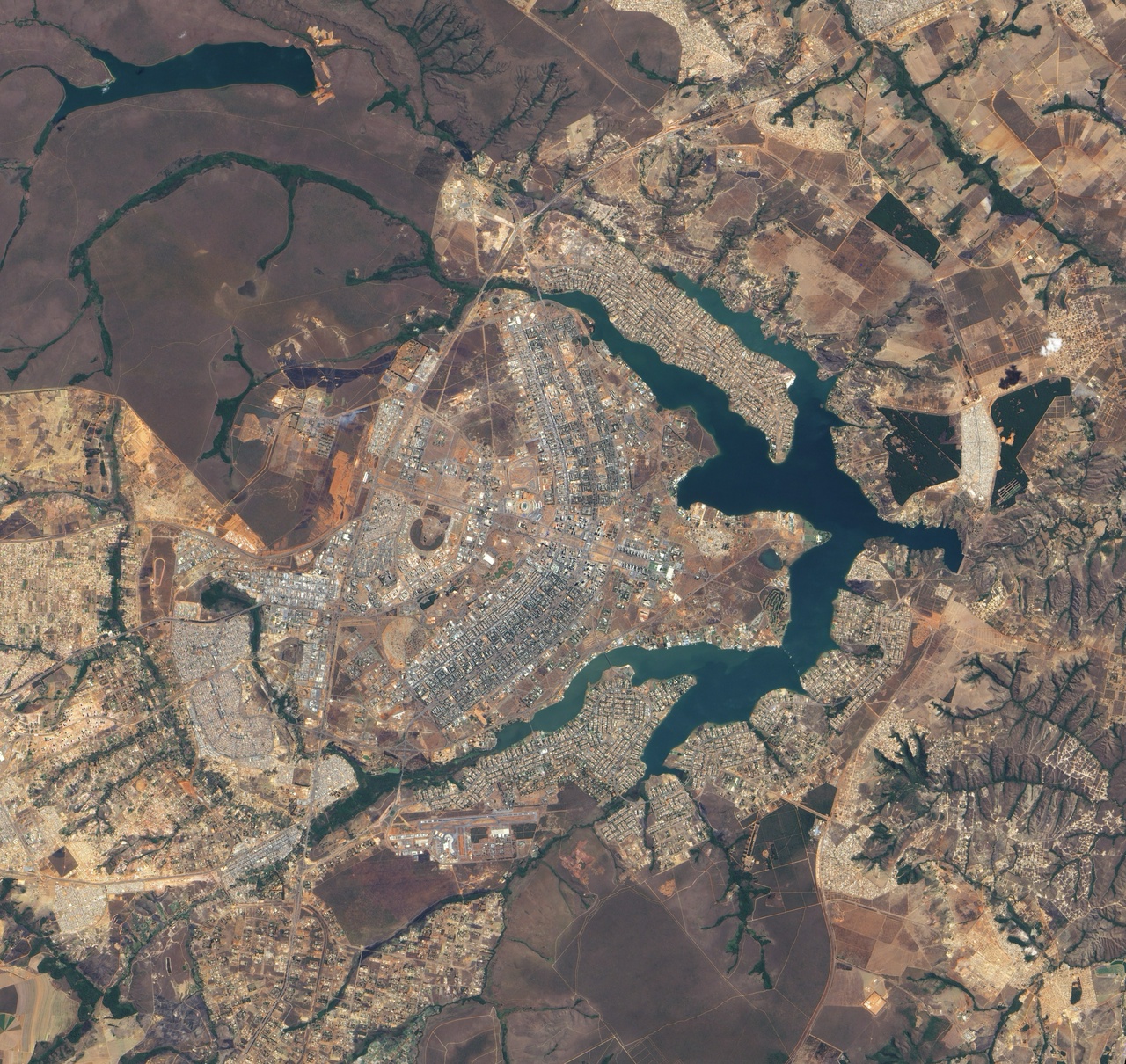
Something about the city attracts mystics and UFO sightings. Somebody told me there are ley lines intersecting there. I don’t know what a ley line is. But I know it does feel like no other place.
Partly the curves and shapes of Niemeyer, partly the open stretches of grass in the middle of the “plano”. (Where there are virtually no pedestrians, as the city wasn’t built for them, just cars. I was walking once and broke into a run when somebody on foot appeared out of nowhere and showed a dogged attempt to cross to get to us. And my Brazilian colleague gave me this frightened look, like “let’s not find out what this person wants from us”.)
Marches and protests all look small in this space. And perhaps vulnerable. Proof of our cosmic or political smallness.
For my job, I spent most of my days there conferring with radical Catholics who were trying to bend the church towards supporting the little people. Hearing how disappointing politics was, even in the age of a President from the northeast, a worker.
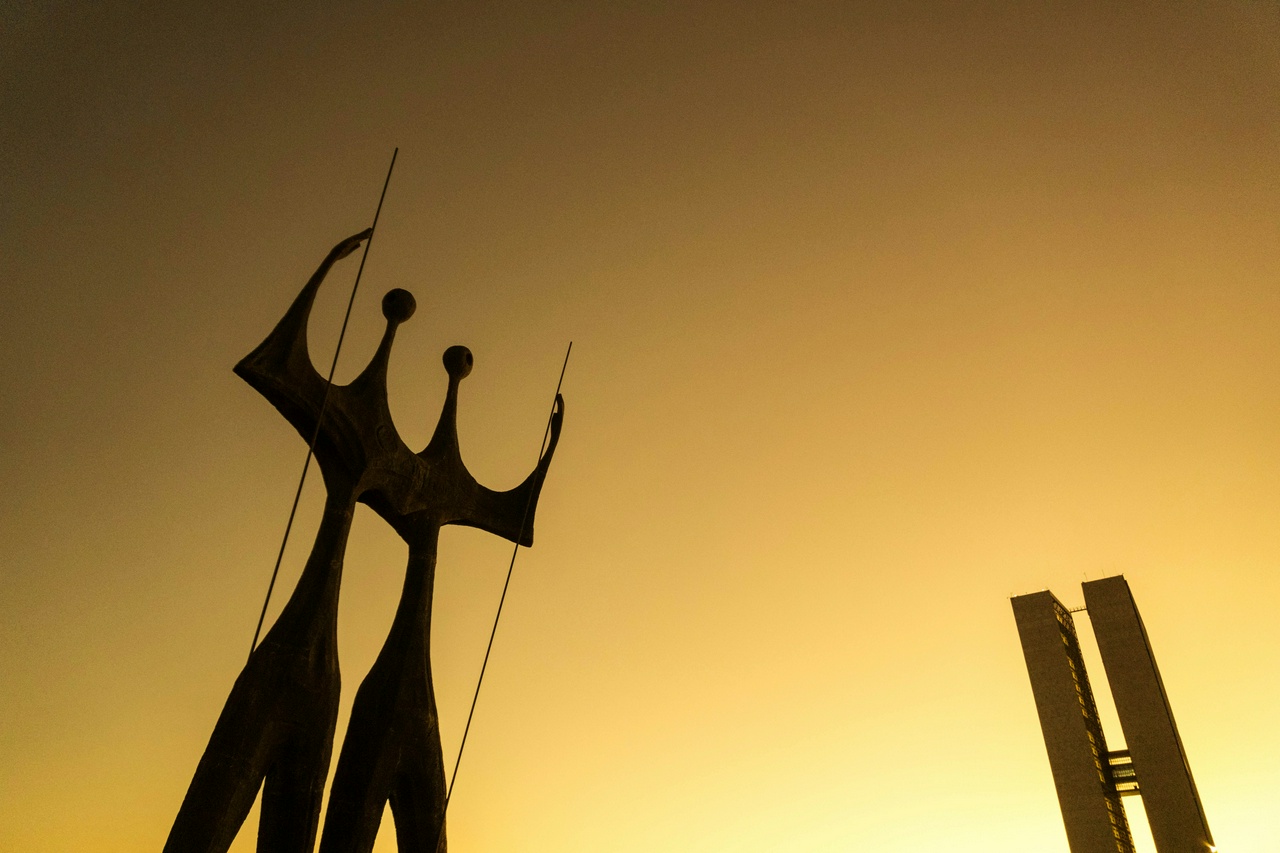
The dry air was the culprit for my nosebleeds. But I’m a big fan of deserts and I never experienced one there. It must have been in the combination of the altitude – 1000m – and the dryness. But my nose didn’t bleed on the dry Altiplano above La Paz, Bolivia. So Brasília was special.
In my dad’s times, a “nosebleed” was a geek. Or it was used to describe the seats in the stadium so high up, that the tickets were cheap. Appropriate then that I would experience my only nosebleeds in life in a city of civil servants and policy wonks, designed to look majestic from above.
I haven’t been to Brasilia since 2010. And I haven’t had a nosebleed since.
But I read nosebleeds are affecting Brazilians when the country is set on fire during the dry season by farmers trying to clear land and forest. The open nasal blood vessels of Latin America.